The CEO Effect: 10 ways to gain CEO buy-in for leadership development

December 10, 2025

Leadership development should be a priority if you want to achieve your organisational strategy
Most Chief People Officers (CPOs) know this; according to the 2024 New Zealand Leadership Trends Report, 74% of HR leaders say building leadership capability is a top priority.
But here’s the sobering part:
Just 38% believe their CEOs are “strongly committed” to these efforts.
No matter how robust your leadership programmes, the real catalyst for change is the CEO. Without their genuine buy-in, even the best leadership initiatives will probably stall before they ever get started.
Why CEO buy-in to leadership development matters
Like most things in an organisation, the CEO’s attitude towards it acts either like a signal booster or a dead zone. Leadership development is no different. When a CEO is all-in, development of your leaders becomes a strategic priority and investment follows. When they’re not, these efforts lack sustainability.
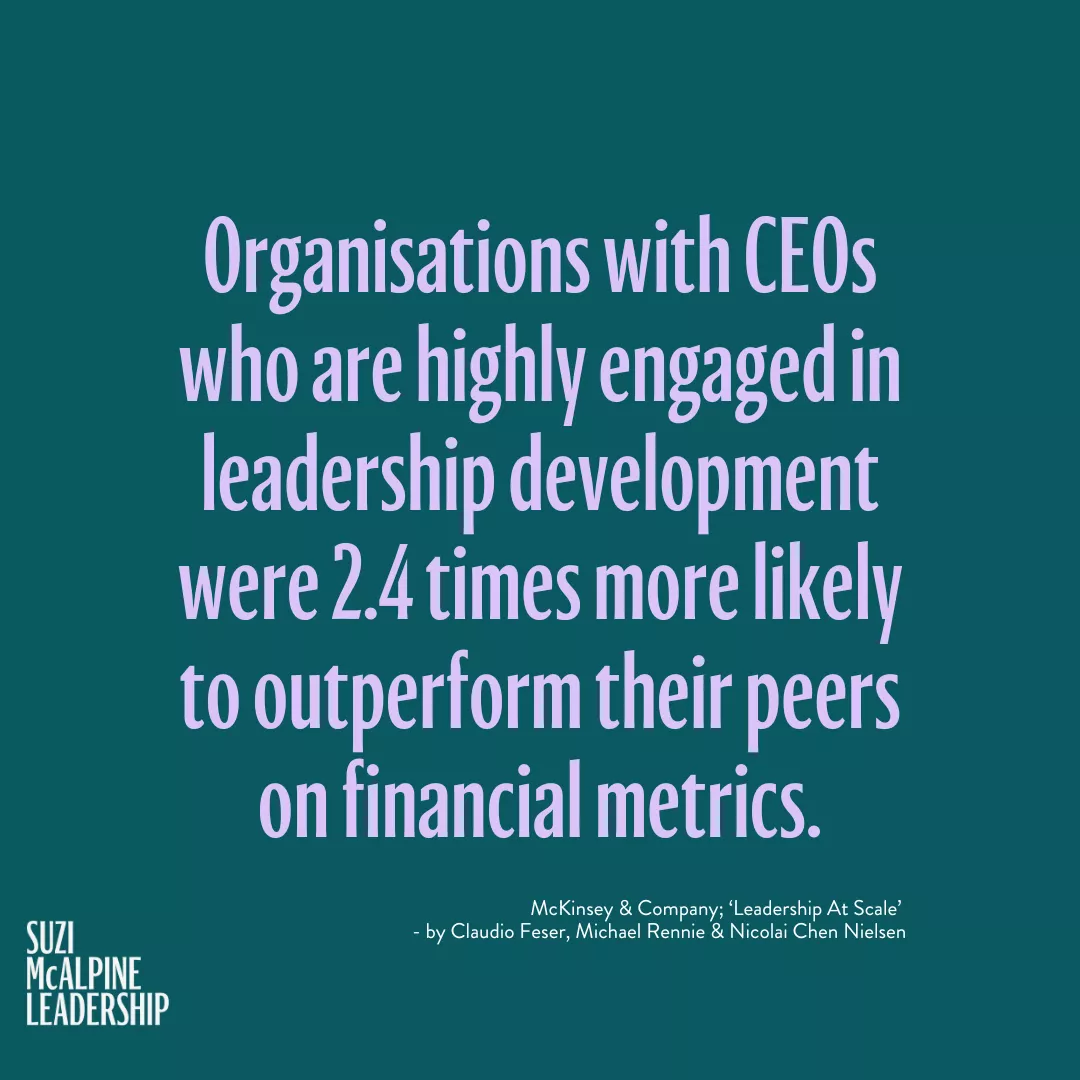
There are also bottom-line benefits of CEO support. A study by McKinsey found that organisations with CEOs that were highly engaged in leadership development were 2.4 times more likely to outperform their peers on financial metrics. 2.4 times!
CEO engagement shapes culture, removes barriers and signals to managers that developing their own leadership (and that of their teams) is critical, not optional.
What gets lost when a CEO doesn’t believe in leadership development?
When CEOs don’t prioritise leadership development, the consequences ripple out – although they are more like waves than ripples:
- Stalled succession planning: Future leaders go unidentified and unprepared.
- Low engagement: Talented people see no career pathway and quietly disengage.
- Missed innovation: Without new thinking from emerging leaders, organisations struggle to adapt.
- Organisational siloes: In contrast to leaders learning together in their unique context who build strong cross-functional relationships
- Retention headaches: your top performers look elsewhere for growth.
In my work with Kiwi companies, I’ve seen brilliant leadership development frameworks gather dust because the CEO couldn’t or wouldn’t articulate “why this matters.” The result? Waning enthusiasm and wasted investment.
As a CPO, what’s the opportunity?
Influencing a CEO (especially one with a packed agenda) requires more than persistence. It’s about strategic storytelling, evidence, and speaking their language.
It’s not about your agenda; it’s about theirs.
Research from Deloitte underscores that CPOs who align leadership development with business priorities are 1.8 times more likely to secure executive sponsorship.
In one New Zealand tech company, the CPO linked leadership development directly to the CEO’s vision for market expansion, framing it as the engine for growth, not a side project.
10 tips to turn your CEO into a champion of leadership development:
- Connect leadership development to business outcomes. Don’t do leadership development in a vacuum or choose generic leadership initiatives that don’t connect directly to the organisational strategy. What is the organisational strategy and what leadership capabilities do your leaders need? What’s the gap to achieve the strategy? How will your leadership development specifically close those gaps? What are the business outcomes that will improve and how?
- Use data to show how developing leaders impacts revenue, innovation, and retention. Bring examples from local industries. One Wellington-based health provider reduced turnover by 15% through targeted leadership upskilling. Find other similar metrics and examples that you can share.
- Frame the conversation in the CEO’s language and around their motivations. Are they all about results? Use that. Do they light up about innovation? Connect leadership development to better innovation outcomes. Do they tune in when you use short bullet pointed options vs long reports? Communicate your ideas in the way they like to communicate, not the way you do.
- Avoid HR jargon. Instead, talk about risk mitigation, growth, and competitive advantage. A simple “Here’s what’s at stake if we don’t invest in our leaders” can shift the conversation.
- Share success stories from peers. Turn to your networks and scan for success stories in the leadership development space. Learn from each other and share what you’re seeing work in other companies with your CEO.
- CEOs love benchmarking 😊. Bring case studies from similar New Zealand organisations that have benefited from CEO-led leadership initiatives. Even connect your CEO to another CEO who has done this. This helps make the benefits tangible and relatable.
- Start small, measure, improve and then scale. Don’t have a big budget or CEO commitment? Start with low hanging fruit and small initiatives and then learn from these and go again. It doesn’t have to be company-wide right from the start.
- Propose a pilot programme with clear metrics. Use early wins as proof points to build broader CEO commitment which shows, not just tells, them about the value.
- Invite CEO participation. Not only in the programme itself (see point 10) but also in the shaping of it. Get them to connect to the fact that this isn’t an HR initiative, it’s a chance for them to create the leaders they want to help them deliver what’s needed.
Encourage the CEO to play an active role. This is one that I have seen work time and time again. With my leadership development programme, The Leader’s Map, we get the CEO to launch and speak at the Kickstart session. Then, we interview them during the course on their own leadership journey, including what they are still learning. This is one clear way to get them invested!
Whether it’s mentoring, leading a session, or sharing their own leadership journey, visibility from the top makes a world of difference.
Leadership development is a team sport, but it’s the CEO that holds the captain’s armband. For CPOs, the real opportunity lies in bridging the gap. In framing leadership as a business imperative, not just an HR project. When CEOs see the benefits of leadership development and embody that, your whole organisation wins.
Let’s keep the kōrero going…what’s worked for you in engaging your CEO? What challenges have you faced? Share your insights below.